Case study · University of Edinburgh, Design Informatics · Timebanking UK · Input Output Research Hub · 2023–24

Exploring how digital tokens could cut the admin of community time banks

Time banks let people trade an hour of help for an hour of help. Across two linked projects, we explored how new technologies could help time banks and other volunteer-based exchanges track their volunteers' activity, and designed a blockchain app that rewards local volunteering with time-based currency.

My role
Research Associate TODO: what you led on these projects
Type
  • Generative
  • Emerging tech
Projects
Tokenising Timebanking in Communities; Addressing socio-technical barriers to adopting blockchains for social good
Partners
Timebanking UK; funded by the Input Output Research Hub
Team
Evan Morgan, Harvey Everson, John Vines

How can technology take the paperwork out of trading an hour of help?

What would a local currency of time need before a community trusts it?

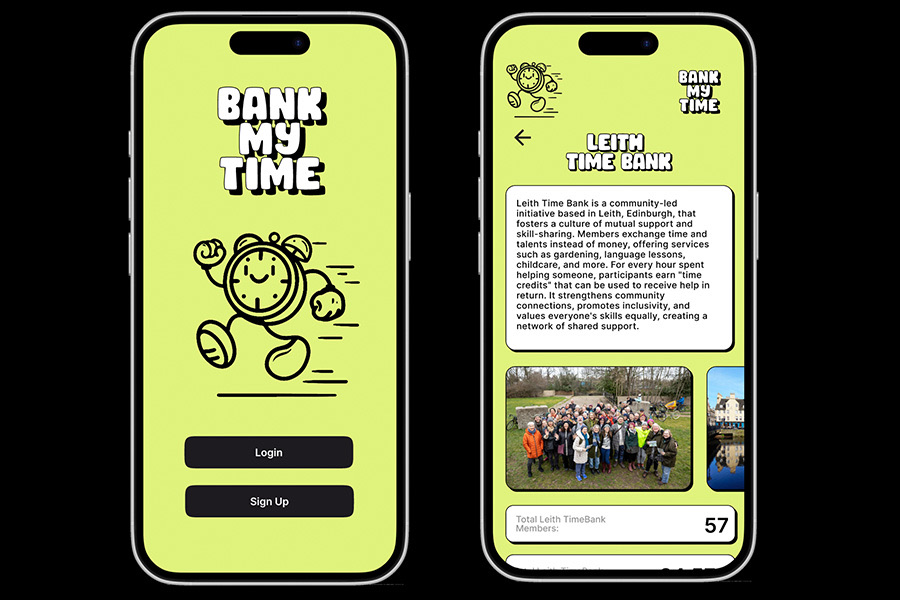
Two phone screens of the Bank My Time app, showing a login screen with a running clock mascot and a Leith Time Bank page with a group photo and member count
App screens from the project, showing Leith Time Bank. Image: Design Informatics, University of Edinburgh.

The question

Time banks run on reciprocity, but keeping track of who gave how much time, and to whom, is administrative work that falls on volunteers and coordinators. The project asked how new technologies could reduce that work, and help volunteers track and exchange their time for help from their community.

Blockchain-based tools for social good remain rare. People's digital literacy, difficult onboarding, and rigid systems that fit complex social settings poorly all get in the way. The companion project asked how to design around those socio-technical barriers.
How time banking works

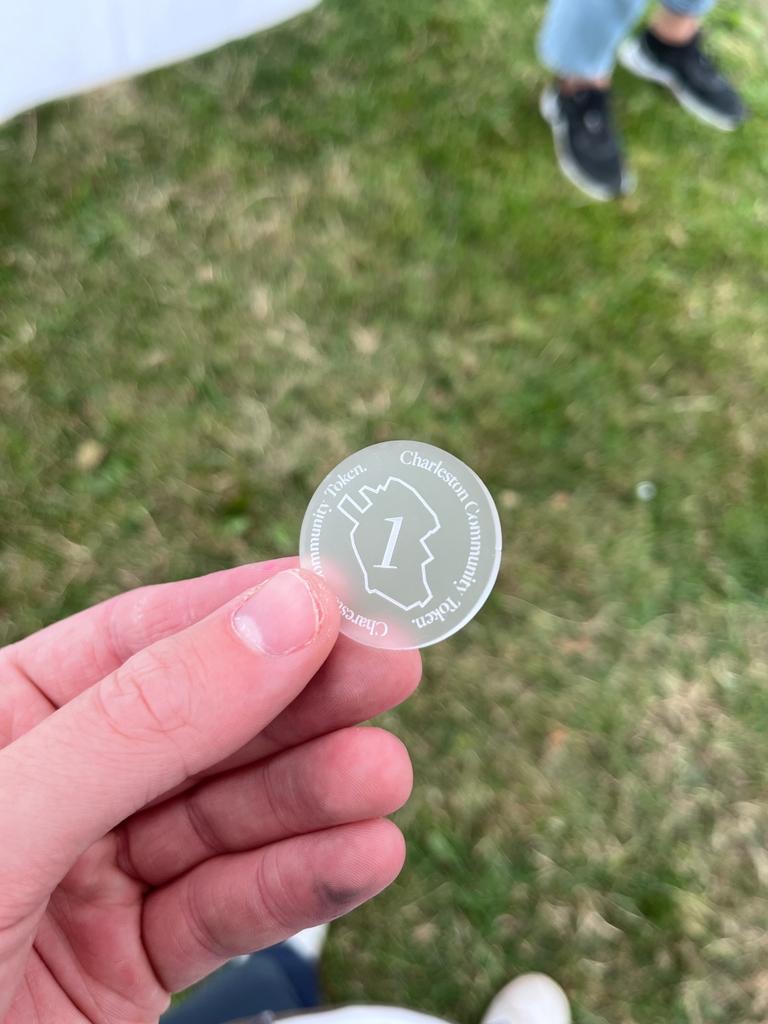
Time banking is a form of community exchange where people trade time-based services rather than money. For every hour of service someone gives, such as tutoring, caregiving or household repairs, they earn one time credit, which they can spend on help from another member. It builds social cohesion and supports underserved people through mutual aid.

My role

TODO: your role, the studies you ran, and who you worked with in the time banks and communities

Methods

  • TODO: methods you used

The project looked at digitally tokenising time exchanges, for example with blockchain technologies, to enable new complementary currencies and forms of exchange within local communities.

Building on Peoplehood, the companion project used empirical and applied research into the human-centred design of a decentralised app (DApp) on the Cardano platform. The DApp gives community members time-based currency for helping others locally, and supports proof of identity and skills through social validation.

Who I worked with

Timebanking UK, with Evan Morgan, Harvey Everson and John Vines in Design Informatics at the University of Edinburgh. Both projects were funded by the Input Output Research Hub.

Key insights

TODO One plain-language finding about how time banks or their members track and value time.

Impact

Artifacts