Case study · University of Edinburgh, Design Informatics · Peoplehood project · 2021–24

Designing a research instrument to study collective decision-making

Group decisions are hard to observe: people say one thing in interviews and do another together. Exchangeopoly is a board game I developed so that decisions about governance and value exchange play out at the table, where they can be studied.

My role
Postdoctoral Research Associate. I led the co-design research and developed the method
Type
  • Generative
  • New method
Partners
Blackwood Homes and Care (lead), Timebanking UK
Context
Peoplehood, funded by InnovateUK, in three communities across Scotland

How do communities decide together what to share, what it's worth, and who gets a say?

How do you study group decisions as they happen, not as people remember them?

The question

Peoplehood explored how digital tools could support community exchange for people facing social isolation. The team needed evidence about how these communities actually govern themselves and exchange value, and an approach that could include people whom standard research methods tend to miss.

The wider project looked at the future of age-friendly neighbourhoods in three communities across Scotland. Our workstream focused on "value exchange": how people already help each other by giving time and sharing tools and resources, and whether alternative local currencies could foster volunteering, social capital and connection between older people and other generations.

My role

I led co-design research with marginalised communities facing social isolation in several Scottish cities. I developed Exchangeopoly as a research tool. I also managed research operations and delivery, and supervised the junior designers and PhD students on the team.

Methods

  • Co-design sessions with users and stakeholders
  • Game-based elicitation
  • Inclusive & accessible methods
  • Facilitated workshops
  • Design probes
  • Research through Design
  • Observation
  • Thematic analysis

I designed and used a variety of methods to surface needs and barriers that standard approaches would have missed. The game builds on my earlier participatory game work (Appetite, 2014), where I found that game rules lead people to act out real-world dynamics rather than describe them.

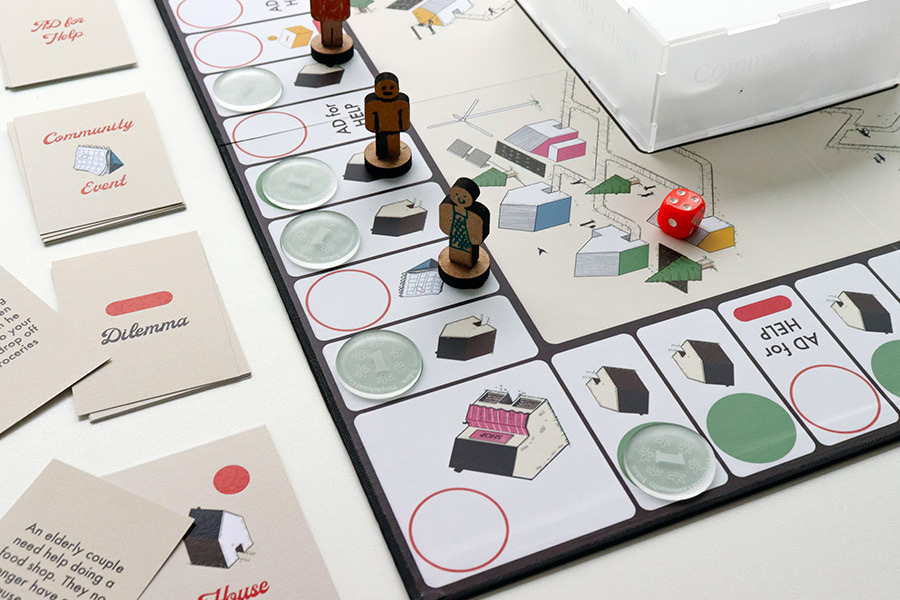
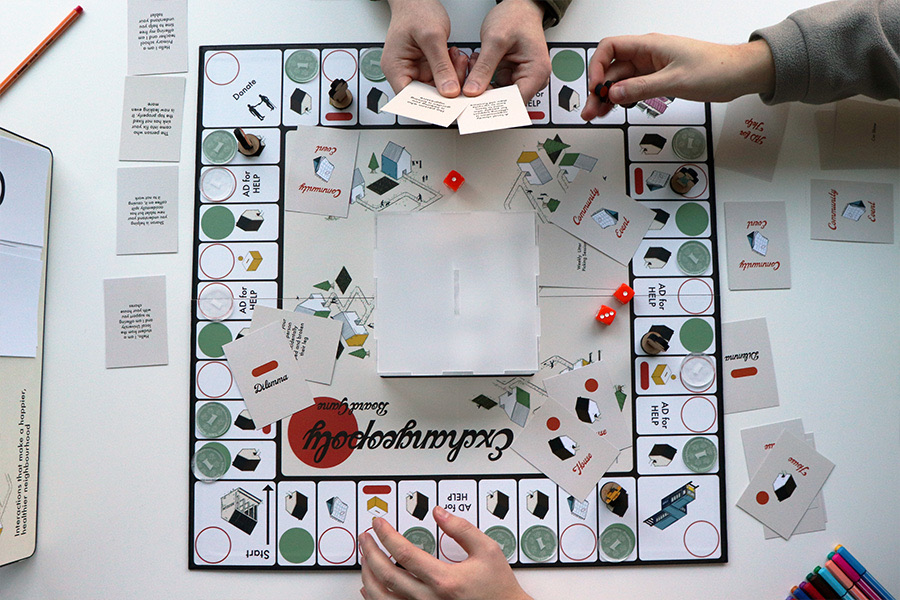
Exchangeopoly adapts Monopoly: players move around a board of homes and community spaces, draw "AD for Help", Community Event and Dilemma cards, and exchange time and help with each other. Alongside design probes and workshops, it was used as a method to surface tacit knowledge and social structures within communities.

Who I worked with

The University of Edinburgh Design Informatics team; partners Blackwood Group (a housing and care provider) and Timebanking UK; and community members across Scotland.

Peoplehood was led by Blackwood Homes and Care and funded by InnovateUK, with University of Edinburgh researchers from Informatics, the Business School and the Institute for Design Informatics. In Design Informatics I worked with John Vines, Harvey Everson and Chris Speed.

Key insights

TODO One or two findings about how the groups actually decided and exchanged value, stated plainly.

Impact