Sensor dashboards rarely change behaviour. Can LLM-generated narratives make environmental data meaningful enough to act on, and what do people need in order to trust a story written by an AI?
Case study · Postdoctoral research · ACM Creativity & Cognition 2025 TODO: confirm which project (MoSaIC?) and venue
Turning sensor data into stories people act on, with LLM-generated narratives
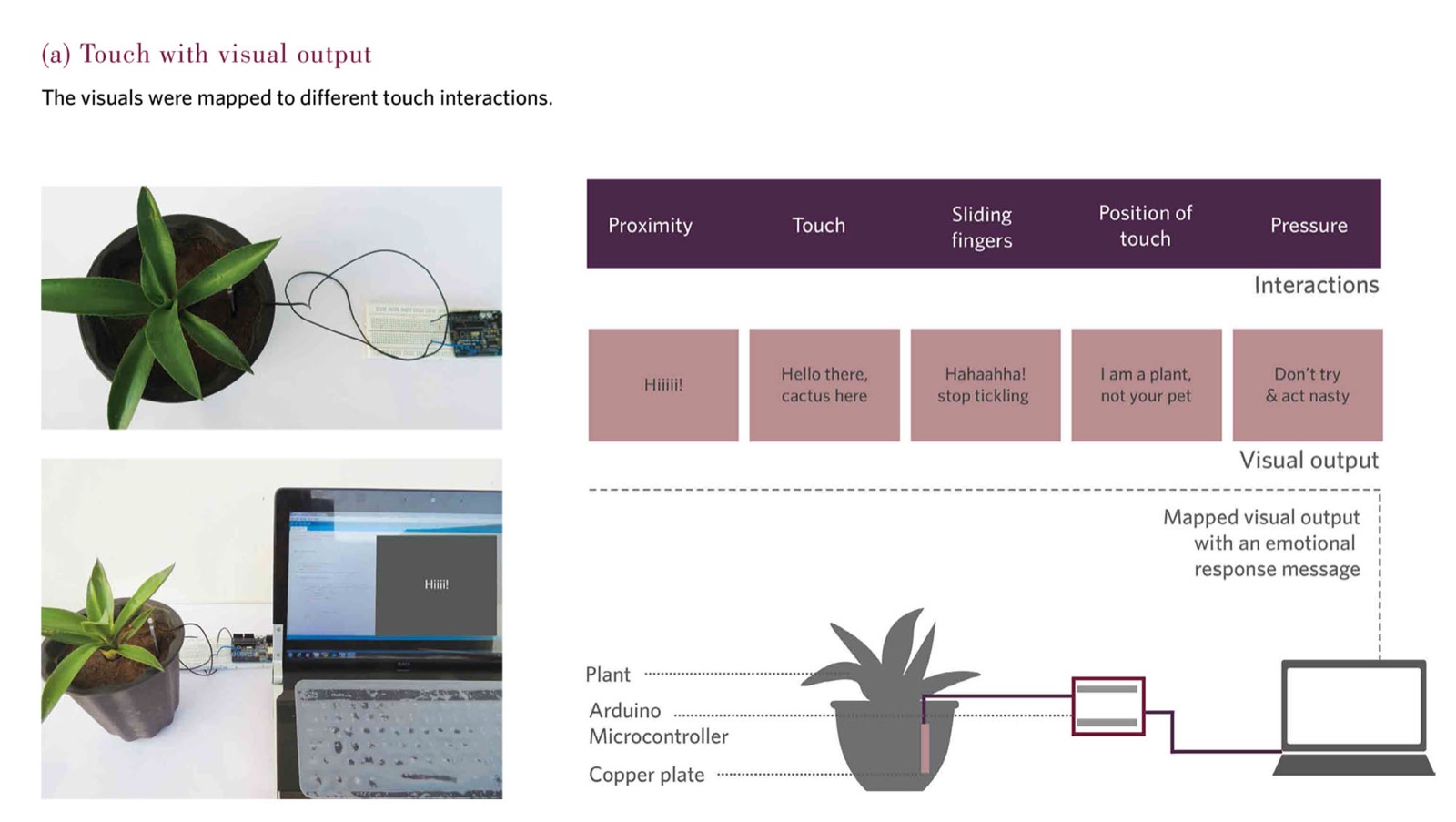
A device that turns live soil readings into short AI-written stories. I used it as a probe to learn how people interpret, trust and respond to generated narratives compared with raw data.
Would people care more about their soil if it could tell them a story?
What makes a story written by an AI believable enough to act on?
The question
My role
I framed the research question, designed the device and the narrative pipeline as a research probe, ran the deployment and interviews, and led the analysis and write-up. TODO: team, duration, participants
Methods
- In-situ field deployment
- Research-through-design probe
- Semi-structured interviews
- Diary / log study
- Prompt & output analysis
TODO: keep only the methods you used; add sample sizes
Who I worked with
TODO: collaborators (engineering, growers, community partners)
Key insights
TODO One finding about when generated narratives built engagement or trust, and when they undermined it.
This is relevant to any team shipping AI-generated content: how tone, provenance and accuracy shape whether people believe and act on what a model tells them. TODO: tie to a concrete finding
Impact
- Published at ACM Creativity & Cognition 2025. TODO: confirm, add link
- TODO: design principles, follow-on work or adoption
Artifacts
TODO: add one photo of the device in use (images/work/soil-stories.jpg)