During 2016, the YCombinator funded startup was deep into research, development, and prototyping of its core optical/smartphone-attached diagnostic hardware and flat-lens technology rather than a mass-market commercial launch. Before production launch, the Inito team needed to know where people struggled to set up and use the device at home, and what had to change so that first-time users could complete onboarding successfully. Also, understand why people stopped using fertility monitoring at home.
Case study · Inito Health Inc., Samplytics, YCombinator · 2016–17
Redesigning onboarding and retention for an at-home health device
End-to-end research from ideation to implementation for a health diagnostics device that shaped the product ahead of its production launch.
Can someone set up a medical diagnostics device at home, alone, the first time, and trust the result?
What are the barriers to user onboarding and retention across an ovulation cycle?
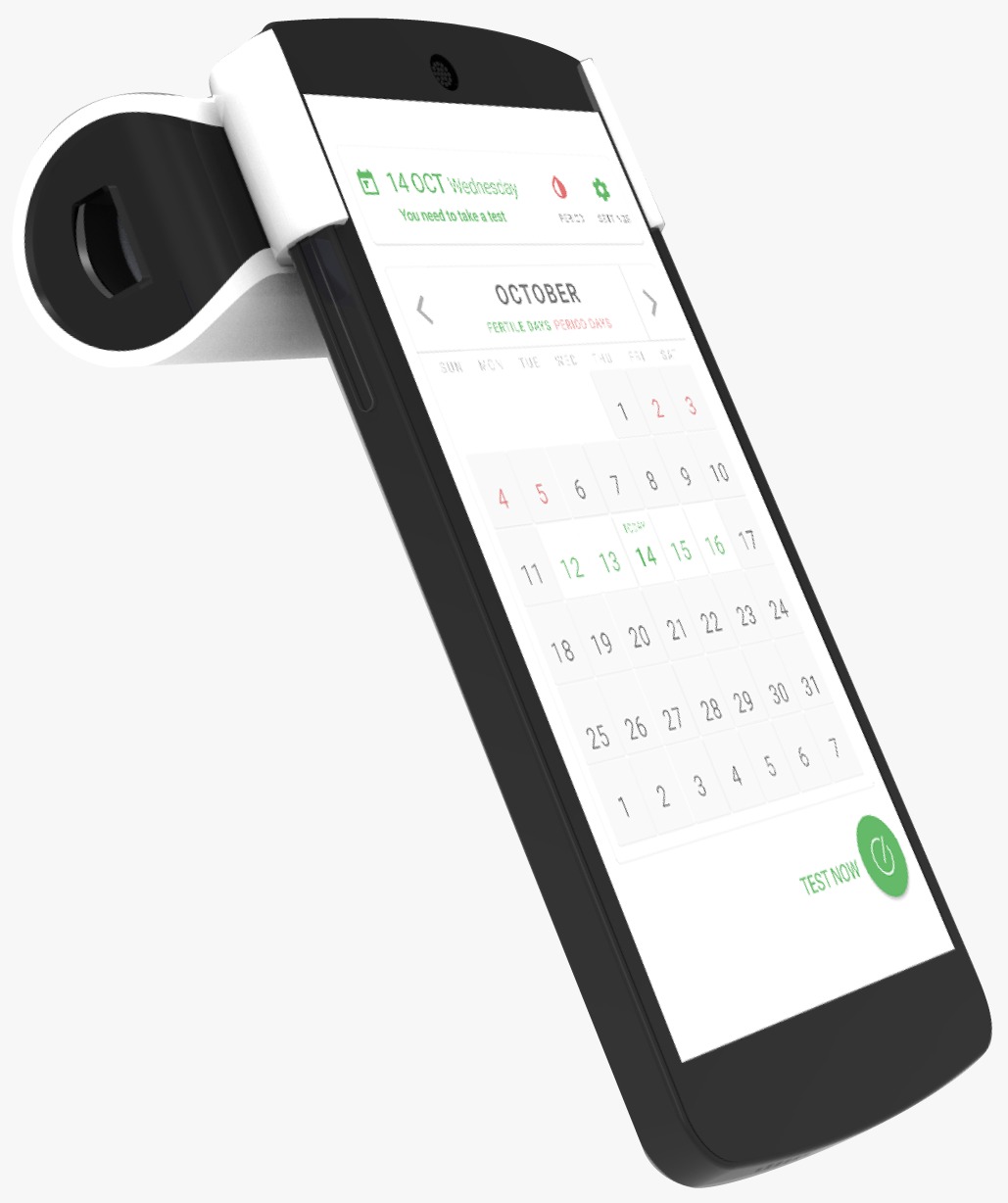
The context
My role
I led the research from ideation to implementation, testing the product before launch. I scoped and designed the studies and turned the findings into redesign recommendations for production.
Methods
- In-home usability testing
- Task analysis
- Mixed-methods evaluation
- Iterative re-testing
I ran in-home usability sessions with 18 women over their ovulation cycle, in their homes, the real context of use, because a fertility hormone-related test is private, often done at a specific time of day, and done without help.
Who I worked with
I was the only researcher in the team of 14 engineers and programmers. I worked with the founders of the startup directly to implement product changes.
Key insights
Sensitive barriers to adoption: social stigma around fertility monitoring made women reluctant to use the device openly at home.
Privacy risks in app notifications that could expose fertility information on shared or visible phones; designed recommendations for discreet, user-controlled alerts.
Impact
- Delivered redesign recommendations for the production launch through mixed-methods evaluations.
- The redesigned onboarding flows raised task completion from 38% to 89%
- Press: Meet Inito, it puts a diagnostic lab in your pocket, FactorDaily, October 2016
- Press: Inito not only allows you to monitor ovulation, but also test multiple other medical conditions at home, e27 via Yahoo News, May 2018