Objects like tables are different from any other multimodal artefacts given the importance of their practical function. Tables are multimodal and semiotic artefacts.
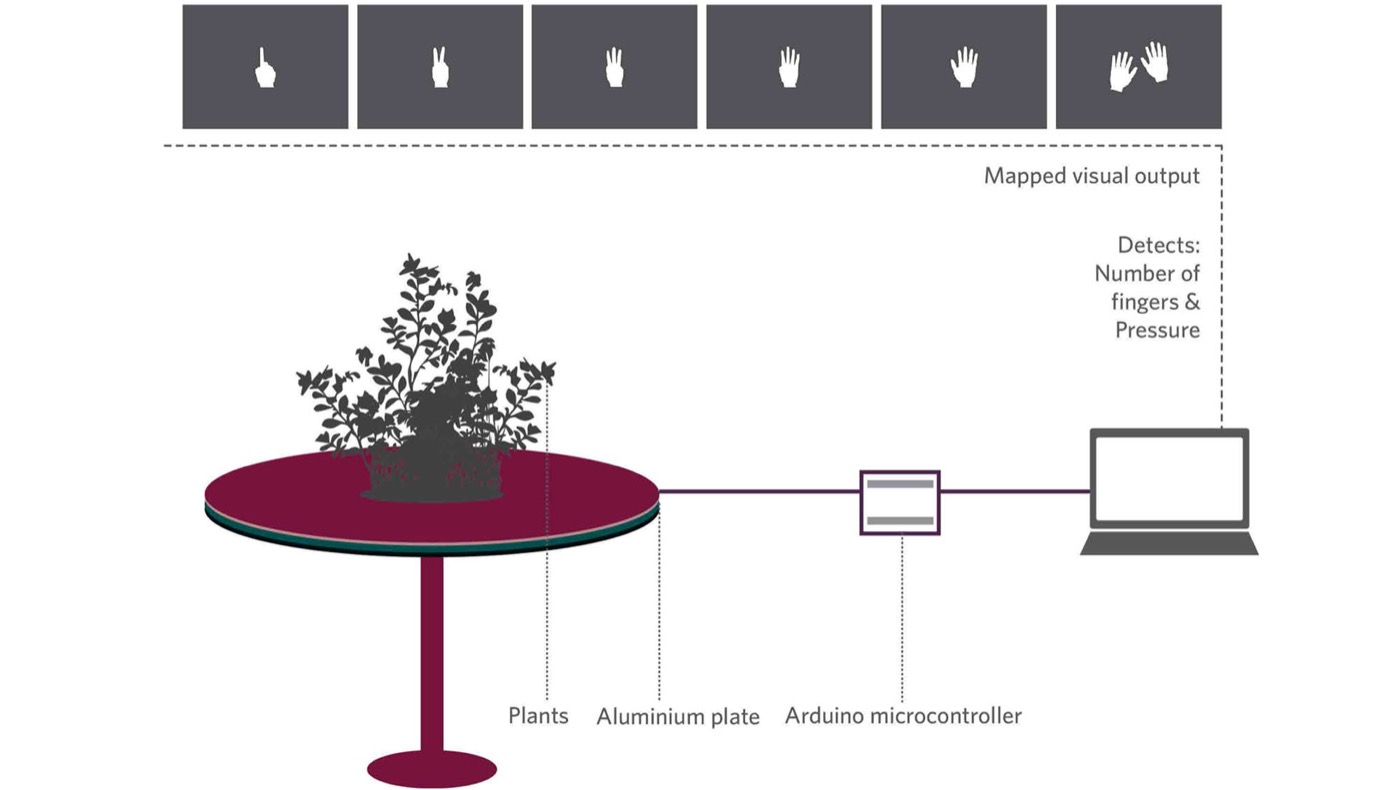
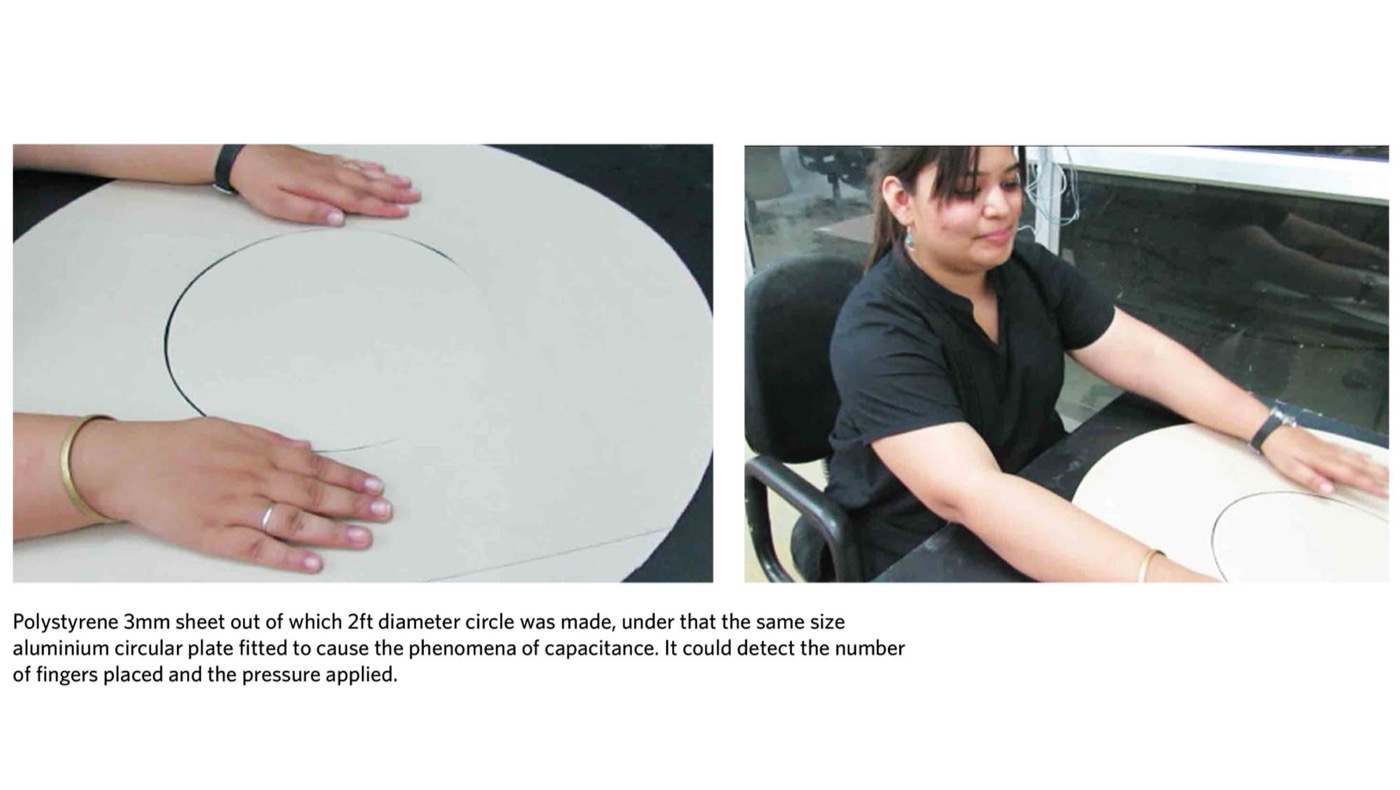
A round table (referred, IKEA study of tables) surface is constructed in two layers, the top is a non conductive layer and the bottom is a conductive layer formed by a metal sheet. They together would act as a capacitance sensing device. With the help of customized electronics and code, the table detects the number of fingers placed and the pressure applied on the surface of the table. Each touch interaction is relayed as readings from the micro-controller. Visuals were put into place to interpret the readings in a simpler fashion. The table top is used for projection of content.
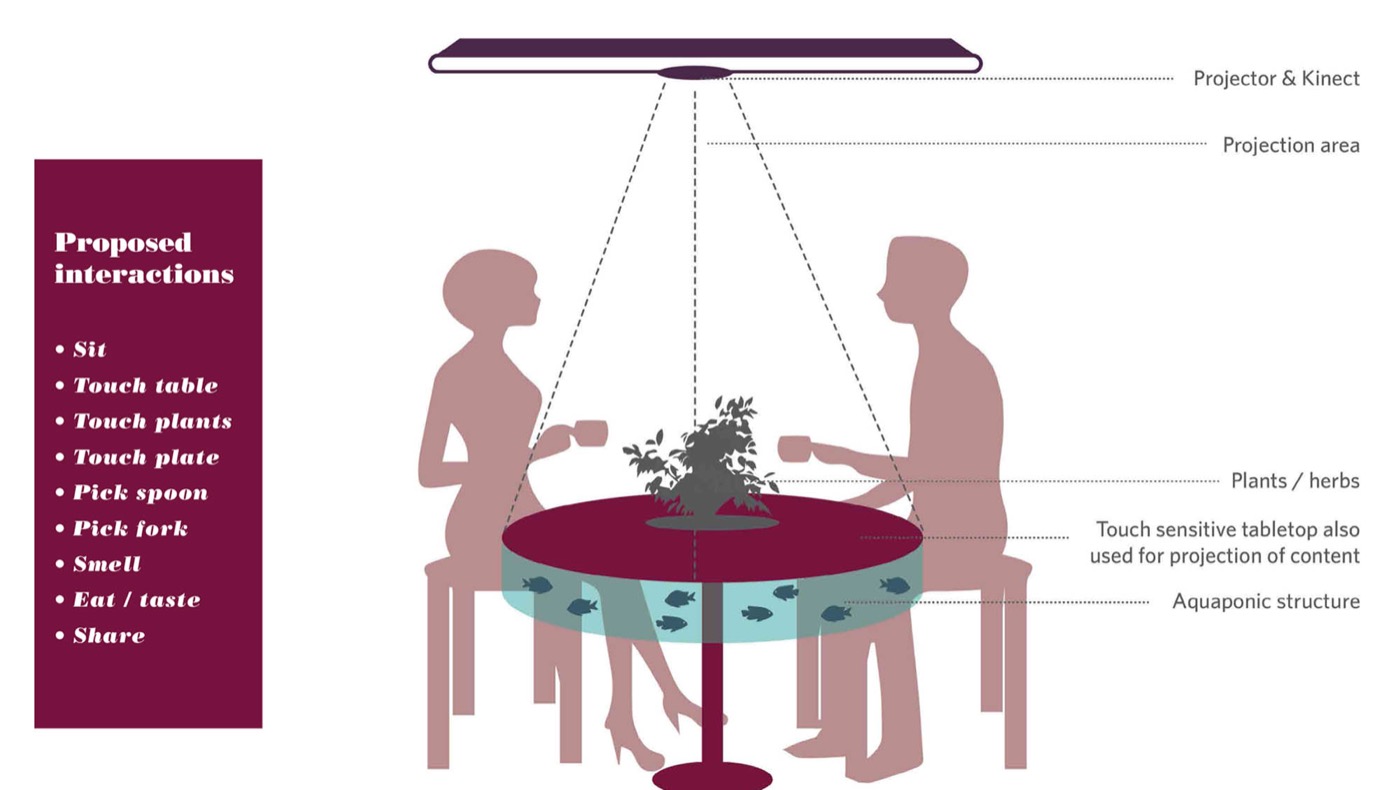
The activities that we perform daily around the dining table like sitting, picking up a spoon, eating, sharing etc. were intended as interactions which can have a mediated output. The content for the output can be mapped and projected on to the surface of the table while food is consumed.
The table is an important cultural artefact in the act “to eat”. In the idealistic situation the table can act as a self sustaining aquaponic structure. It will support plant and aquatic life which can become part of the food chain of the person. Herbs, vegetables can be grown alongside with fishes. They help in providing each other with the needed nutrients and oxygen to survive. The surface of the table will offer immediate value and the plants/ fishes will suggest contemplation value. The table’s intent is to motivate people to live a sustainable locavore lifestyle.